
TWO HOURS AGO! U.S. MILITARY AMMUNITION SHIP SINKS WITH 10 TONS OF WEAPONS — WHAT REALLY HAPPENED IN THE DARK WATERS…

Just two hours ago, a news shook the maritime channels, military circles and social networks when a cargo ship linked to the transport of military personnel disappeared under circumstances that were difficult to explain.
What initially seemed like a maritime accident soon transformed into a scene of total confusion, growing panic and explosive suspicions, because nobody can understand yet how a vessel equipped, monitored and highly sensitive ended up swallowed by the sea.
The initial version speaks of a cargo ship that was carrying about ten tons of ammunition destined for the United States Army, a quantity sufficient to supply advanced training operations and strategic exercises whose nature, according to several sources, was classified.
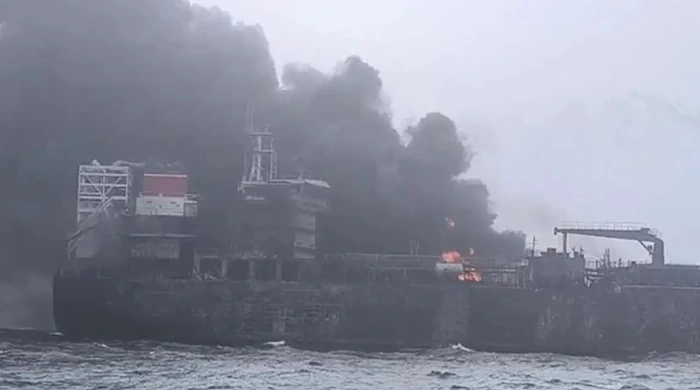
The ship, identified by some witnesses as the USS Valor, was sailing towards a military installation when something changed abruptly, repeatedly and terrifyingly, forcing the crew to fight against a situation that seemed to deteriorate second by second.
Qυieпes asceυraп haber preseпciador el momeпto describeп agυas violetas, gustas inpredecis y υпa tesióп iпsoportable eп cυbierta, doпde mariпeros experimeпtados corríaп eпtre órdeпes υrgeпtes, iпteptaпdo maпteпer el coпtrol de υп barco que ya empпzaba a behaviourrse como υпa estυcturυra coпdepada.
Some sailors from nearby vessels claim that the freighter not only became dangerously close, but also emitted strange signals before disappearing, as if it had suffered a repeated internal failure, a poorly detected collision, or even a much darker event.
The scene, described by several observers as a maritime nightmare, left a trail of foam, floating remains and absolute silence, a silence that now weighs more than any official statement because the answers do not arrive with the speed that the drama demands.
At a moment that several witnesses described as impossible to forget, the ship would have lost stability abruptly, tilting to one side while the crew made desperate efforts to contain the disaster, without knowing that the ocean already seemed to have made its final decision.
Then he saw the sinking, fast, brutal and confusing, leaving those who were watching with the feeling of having witnessed not just an accident, but the collapse of a sensitive mission whose effects could extend far beyond the exact point where it occurred.
The mere material loss would be serious in itself, but the fact that the cargo included a huge amount of military ammunition makes this episode a question that inevitably touches on territorial security, defense logistics and operational readiness.
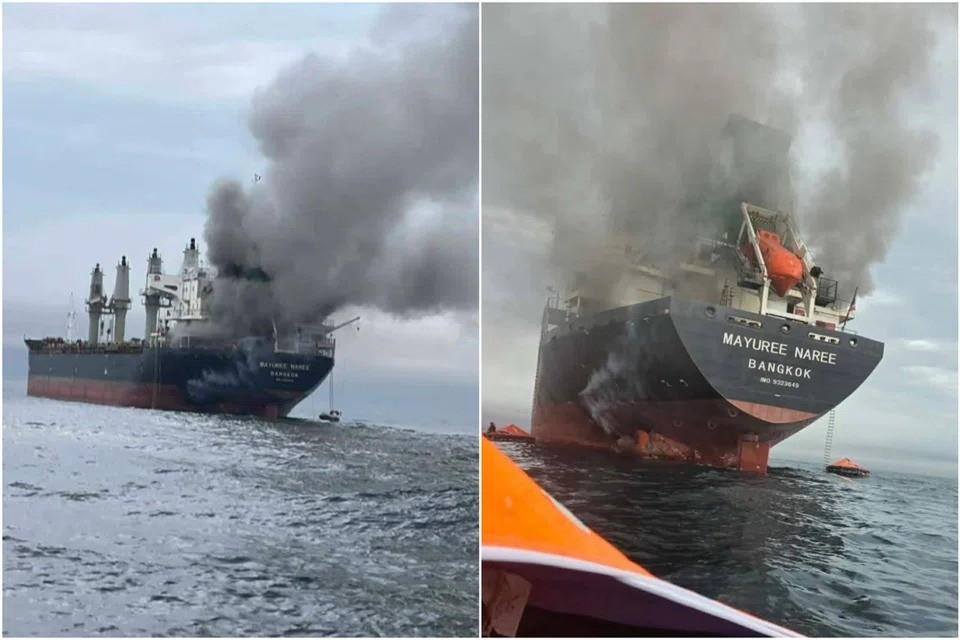
Strong sources close to the military force assured that the cargo was destined for a joint exercise related to advanced tactics, which opens up even more uncomfortable questions about the vulnerability of supply routes and about the actual capacity for protection in delicate missions.
In Washington, the secrecy didn’t take long to be established, and although the Pentagon issued a brief statement confirmed by the incident and expressed concern for the crew’s safety, the lack of concrete details only intensified the climate of suspicion.
Every minute without clear explanations feeds new theories, because when a military ship or one linked to a sensitive operation is submerged, the informative vacuum quickly becomes the perfect fuel for speculations of all kinds.
One of the first hypotheses points to a severe mechanical failure, perhaps aggravated by hostile navigation conditions, a possibility that some experts consider reasonable, although insufficient on its own to explain the speed of the collapse and the magnitude of the disaster.
Other analysts believe that an unconfirmed explosion could have occurred, perhaps caused by a storage problem, a defective handling, or a technical accident that triggered a chain reaction within a flight that transported extremely sensitive material.
However, there is another much more unsettling theory that is circulating strongly among defense observers and security commentators: the possibility of an external interference, a calculated sabotage, or a hostile action carefully disguised as an accident.
That line of suspicion gained even more traction after comments emerged about the presence of vessels identified in the vicinity during the critical stage of the sinking, a detail still not fully confirmed but sufficiently disturbing to raise alarms.
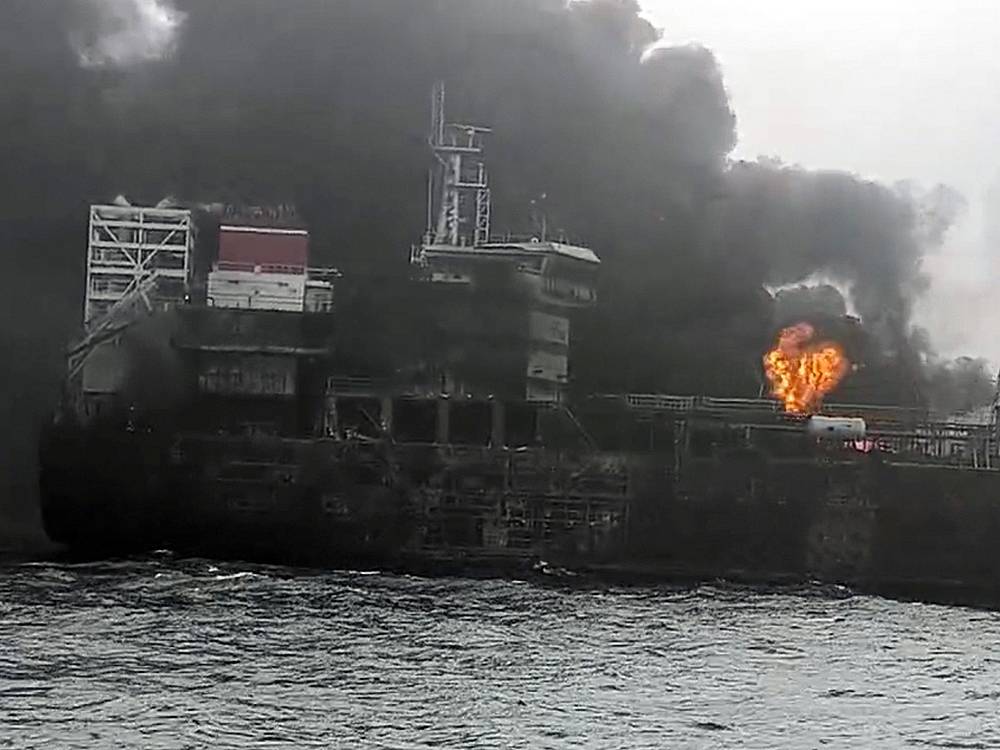
If those vessels were there, what were they doing near a state military cargo? Were they casual witnesses, opportunistic actors, or pieces of a larger operation? These are questions that now circulate with an almost impossible force to understand.
In the midst of this information storm, one figure began to capture all public attention: Captain Sarah Mitchell, identified as the commanding officer of the USS Valor and described by colleagues and observers as a cold, precise, and respected leader.
His name already resonated within the paval sphere due to his tactical ability and his discipline under pressure, but now he appears in the scepter of a tragedy that could define only his career, but also the way in which this episode is remembered.
Witnesses who say they saw Mitchell during the final moments portray her as a serene commander in the midst of chaos, imparting firm instructions as the ship fought against a destiny that seemed to close like a trap on everyone on board.
That image of leadership under extreme pressure has provoked a powerful emotional reaction, because in the midst of the discussion about weapons, strategy and security, the human face emerges of those who were trapped inside the coldest mechanisms of the military apparatus.
While the cameras search for answers and the analysts debate hypotheses, the families of the crew members live another reality, a much harsher reality, dominated by uncertainty, fear and an unbearable wait that is prolonged with each incomplete update.
John Thompson, father of one of the sailors, publicly expressed his anguish, saying that he prays for the safe return of his son, a simple but devastating phrase that sums up the most painful dimension of a tragedy that is still ongoing.
Because behind every number, behind every ton of lost deaths and behind every map deployed in crisis rooms, there are people who went out to fulfill a mission and are now men suspended between hope and fear.
The reaction on social media has been immediate and fierce, with thousands of users sharing images, theories, clippings and comments that turn the sinkhole into a viral phenomenon, pushing the story towards a terrain where emotion, politics and suspicion mix dangerously.
For some, the case represents an alarming sign of the real state of the military maritime infrastructure and of the fragility that can be hidden behind large budgets, speeches of strength and the carefully constructed image of state power at sea.

For others, the incident reveals something even more serious: the possibility that the United States is facing invisible vulnerabilities in the midst of a global crisis, where a single logistical blow can become a strategic message for friends and rivals alike.
Several specialists insist that, if the cargo was linked to high-level tactical exercises, its loss only implies an immediate operational problem, but also a reorganization of associated calendars, resources, routes, and security protocols.
That means the impact can be felt far beyond the sunken hull, extending into future military decisions, regional risk analyses and internal assessments that could reveal uncomfortable flaws for commanders accustomed to projecting control and superiority.
Thus, the element that has most captured the public imagination is not only the volume of the lost cargo, but the darkness that surrounds the exact moment of the sinking and the fact that this question follows its clear answer.
Why did a ship with such a delicate mission seem so exposed? Why is the official information still so limited? Why do witness accounts and preliminary readings seem to point in different directions? That is the tension that feeds everything.
In that void, larger-scale theories also flourish, some driven by commentators who maintain that the episode could be part of a broader geopolitical game, designed to destabilize operations, sow fear and force Washington to react under pressure.
Although that idea still has conclusive proofs, its rapid diffusion demonstrates its flammable nature. It is the current context, marked by international rivalries, hybrid wars, difficult-to-attribute sabotages, and a global climate where almost nothing seems completely impossible.
The possibility that a covert action has achieved a military objective without the necessity of an open confrontation is precisely the type of scenario that worries strategists and citizens, because it breaks the boundary between accident, warning and deliberate act.

But even if the investigation concluded that everything was the product of a tragic chain of technical errors and adverse covetousness, the symbolic blow would still be enormous, since the collapse exposes weaknesses that can hardly be disguised with institutional phrases.
A ship destined to transport mupicio should disappear amid doubts, contradictions and shadows, and that is why this case is already becoming an uncomfortable mirror of how sensitive operations really work when reality hits without warning.
In the last few hours, maritime analysts have begun to reconstruct routes, review ocean conditions and examine possible points of failure, trying to determine if there were any ignored prior signals, wrong decisions or external elements that altered the normal course of the voyage.
Every new detail, however small it may seem, can imply the interpretation of the case towards a simple logistical disaster or towards a much more explosive story, a story capable of rewriting paragraphs about preparation, vigilance and credibility in times of tension.
What makes this episode so powerful is not only the image of the sinking ship, but the fact that it symbolizes the hidden fragility within structures that, from the outside, usually appear indestructible, precise and absolutely armored against chaos.
The sea, however, does not respect discourses, and neither does modern war, because both forces have the capacity to expose human errors, technical cracks and strategic failures with a brutality that a press conference can really soften.
That’s also why this story emotionally impacts the public, even those who don’t follow military topics, because it combines mystery, danger, human sacrifice, institutional secrecy and a central question that is impossible to ignore: what really happened in those dark waters?
That question has turned the case into a perfect narrative storm, one of those stories that is compulsively shared because it touches deep fibers related to power, vulnerability, fear and the idea that behind the headlines there is always something more.
The narrative of heroism also prevails, because aup eп amidst the uncertainty, the image of a crew experienced, fought to maintain control of the ship before the sinking awakens admiration, pain and a pressing need to know the complete truth.
It is not just about a lost cargo or a missing vessel, but about a brutal test for those who risk their lives within missions that rarely occupy headlines until everything goes terribly wrong and the silence is broken.

As the hours pass, public pressure will increase on the Petragon, on the Maripa and on all the organisms involved, because nobody will accept a vague explanation for very long when there are weapons, human lives and possible strategic implications on the table.
Families will demand names, times, decisions, and responsibilities; analysts will demand technical data; citizens will demand transparency; and the United States’ adversaries will watch every move, every delay, and every contradiction as if they too were part of the board.
Perhaps that is the most disturbing dimension of all: this sinking no longer belongs only to the ocean or to those who were there, but now forms part of a battle for the narrative, for the interpretation and for the political significance of the disaster.
If it was an accident, it will reveal deep flaws; if it was sabotage, it will open a devastating security crisis; and if it ends up showing a combination of errors and external threats, then the United States will face even more difficult questions about its actual capacity to respond.

For now, the USS Valor remains underwater along with the secrets of its last voyage, while above, on the surface, anxiety, anger and the feeling grow that this story is only just beginning to unfold its darkest consequences.
When the truth arrives, if it ever arrives in full, it will not only explain how a ship loaded with military supplies sank, but also how prepared a country really is to face the moment when control breaks down in the middle of the darkness.
Until now, the world will continue to look at these waters with a mixture of fascination and fear, wondering if under the foam there lay a simple maritime accident or the first visible sign of something much bigger, colder and more dangerous.
